
Engineering Secure AI Agents: Permissions, Sandboxing, and Zero Trust
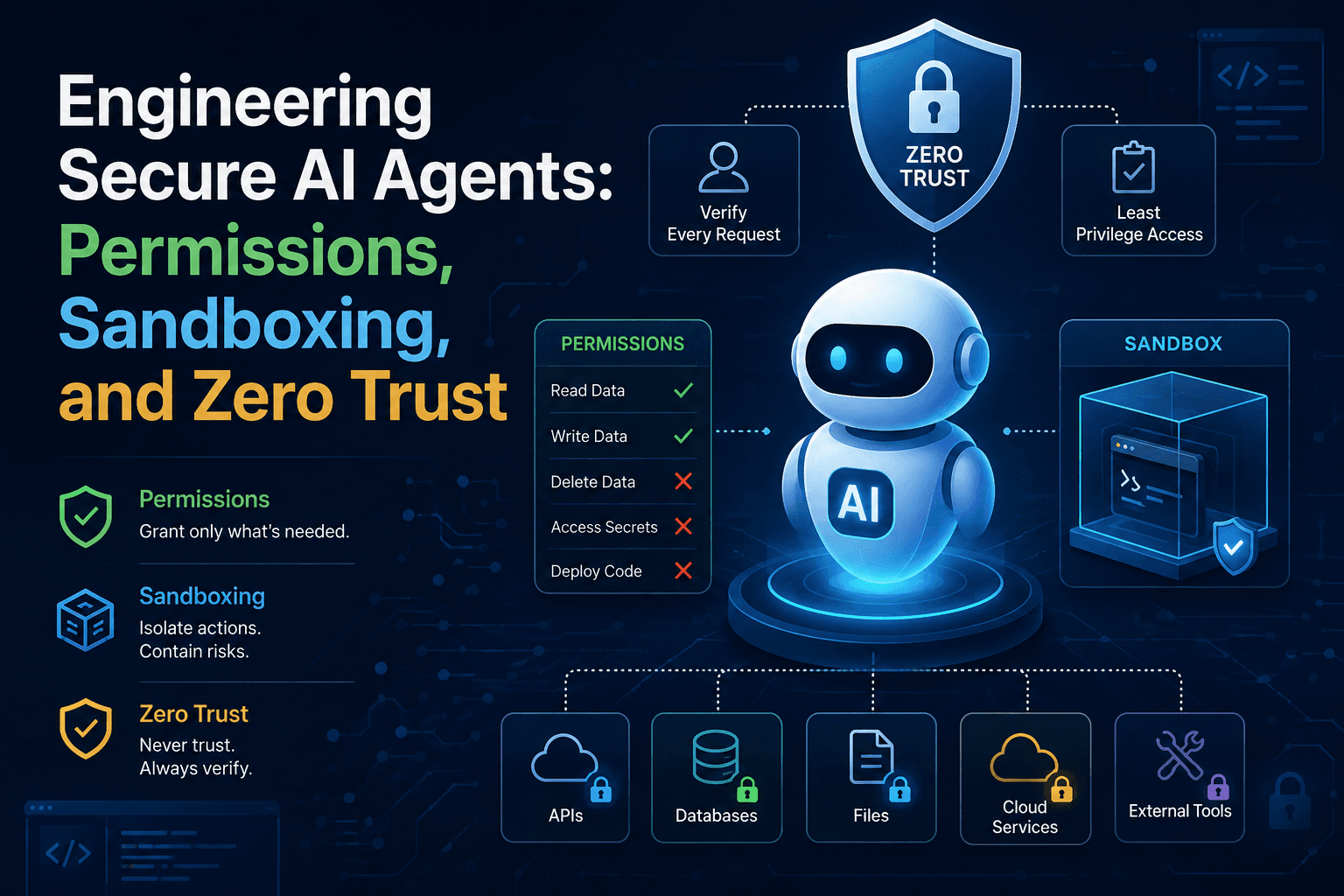
“As AI agents gain access to APIs, databases, files, and external tools, security becomes paramount. A practical guide to least-privilege permissions, runtime sandboxing, Zero-Trust architecture, secrets protection, human-in-the-loop approvals, and continuous auditing.”
1. Core Architectural Concepts & Motivation
As modern distributed software moves toward intelligent, real-time autonomy, engineering systems require protocols that can reliably synchronize state, maintain low latency, and safely orchestrate complex tasks across decoupled services.
2. Production Code Pattern
3. Key Takeaways & Best Practices
- Prioritize sub-500ms response latencies for conversational agent realism.
- Ensure webhook handlers are idempotent and equipped with auto-retry mechanisms.
- Decouple frontend state orchestration from long-running background tasks.

Related Articles
MCP Is Becoming the API Layer for AI Agents
AI agents need a standard way to connect with tools, data, and services. Explore how MCP could become an agent-facing layer alongside REST APIs, databases, SaaS platforms, and internal systems.
AI Agent Memory Architecture: Short-Term, Long-Term, and Persistent Memory
AI agents need more than just intelligence—they need memory. Explore the architecture of short-term conversational context, long-term vector retrieval, and persistent storage that enable agents to remember across sessions.
Understanding Google’s A2A Protocol for AI Agent Communication
Learn how Google's Agent-to-Agent (A2A) Protocol enables AI agents to securely communicate, collaborate, and exchange tasks across different frameworks and platforms in the multi-agent era.